Plumeria
Plumeria fills warm evenings with an intoxicating fragrance and silky, five-petaled blooms in every shade from ivory to deep crimson.
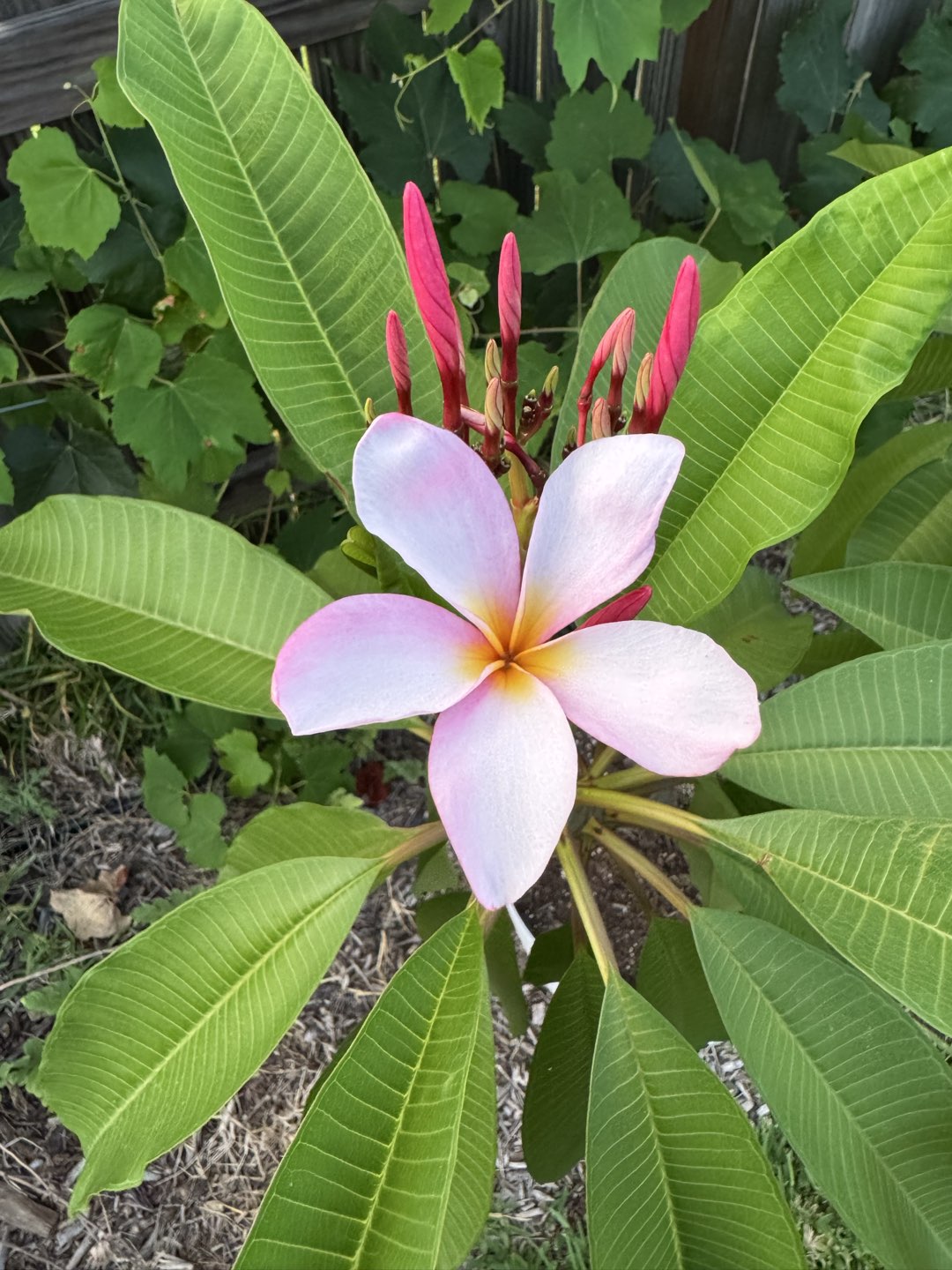
The Scent of the Tropics
Plumeria rubra is the species most commonly strung into Hawaiian leis, though it hails from Central America and Mexico. Its thick, succulent-like branches store water and nutrients, allowing the tree to survive dry seasons by dropping its leaves and resting - a trait that surprises many first-time growers who mistake dormancy for death.
In frost-free climates it grows into a multi-branched, spreading tree reaching 15-25 ft, but it thrives in large containers in cooler regions and can be brought indoors for winter. Cultivar selection is enormous, with flower colors spanning white, yellow, pink, red, and bicolor combinations, many with distinctly different fragrance profiles.
Planting & care
Plant plumeria in well-draining soil - it is highly rot-prone in soggy conditions. Choose the sunniest spot available; fewer than 6 hours of direct sun dramatically reduces bloom. When planting in a container, use a coarse cactus or palm mix amended with extra perlite. Water deeply after planting, then let the top few inches of soil dry completely before watering again.
Feed with a low-nitrogen, high-phosphorus fertilizer (such as a 10-30-10 formula) every 2-3 weeks during the growing season to encourage flowering rather than leafy growth. In fall, taper water and stop fertilizing as the plant enters dormancy. If overwintering indoors, store in a cool, dry spot around 50-60°F and resist the urge to water until new growth appears in spring.
Milky Sap Warning
All parts of Plumeria rubra contain a milky latex sap that is mildly toxic and can irritate skin and eyes - wear gloves when pruning or taking cuttings. Cuttings must be allowed to callous in a dry, shaded spot for 5-14 days before planting; skipping this step almost always leads to rot rather than roots.
How much sun does Plumeria need?
Plumeria grows best in full sun.
How often should you water Plumeria?
Give it about moderate - allow soil to dry between waterings.