Dragon Fruit Cactus
A sprawling night-blooming cactus that produces strikingly vibrant, sweet-fleshed fruit beloved across tropical markets worldwide.
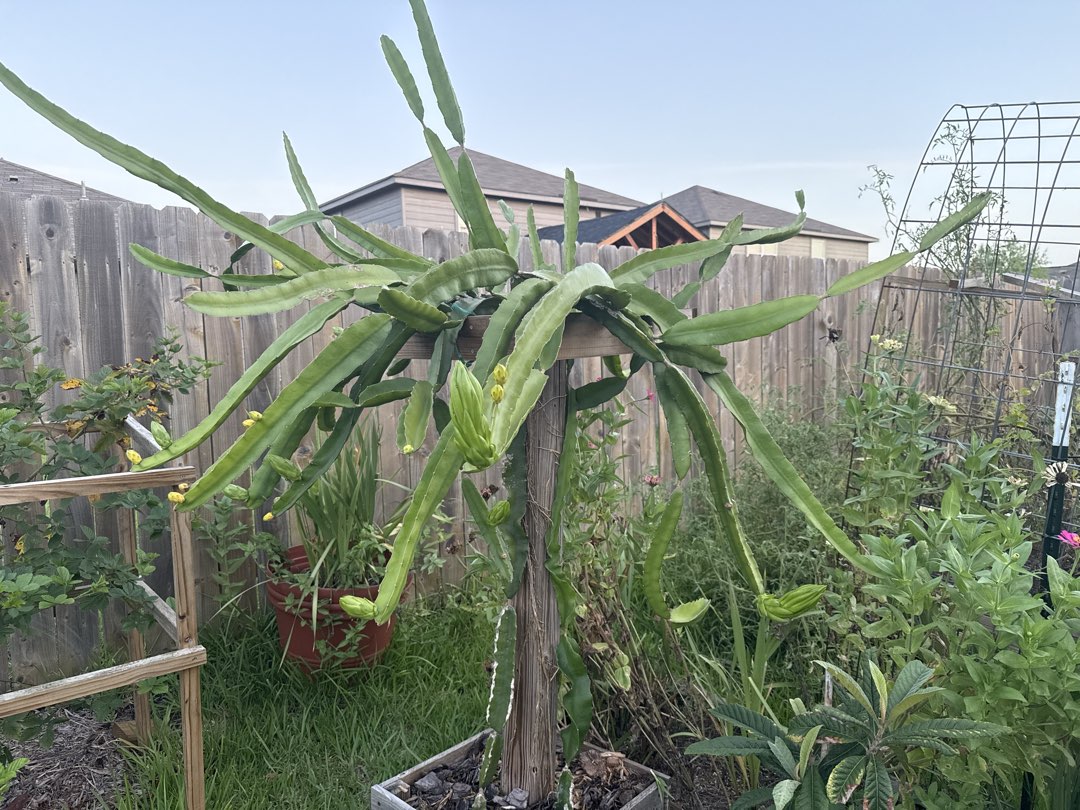
The Cactus That Blooms at Midnight
Dragon fruit cactus is a vining, epiphytic cactus native to Central America that has been widely cultivated across tropical Asia, where it now thrives as a commercial crop. Its enormous white flowers - among the largest of any cactus - open only after dark and last a single night, relying on bats and moths for pollination.
The fruit itself, technically a berry, comes in several varieties: the most common features hot-pink skin with white flesh, though red-fleshed and yellow-skinned types also exist. Flesh is mildly sweet with a subtle kiwi-like flavor and dotted with tiny edible black seeds throughout.
Planting & care
Plant in well-draining sandy or loamy soil with a pH of 6.0-7.0. Dragon fruit needs a sturdy trellis or post to climb - mature plants can exceed 20 ft and become quite heavy. Space plants 8-10 ft apart. In cooler climates, grow in large containers that can be moved indoors during cold snaps. Fertilize with a low-nitrogen, higher-phosphorus fertilizer every 4-6 weeks during the growing season to encourage flowering.
Water deeply but infrequently, allowing the soil to dry out between waterings - overwatering is the most common mistake and quickly leads to root rot. Prune older or overcrowded stems after harvest to improve airflow and redirect energy into new fruiting wood. Hand-pollinate flowers with a soft brush between different plants or varieties for the best fruit set, as self-pollination is unreliable in S. undatus.
One Night Only
Dragon fruit flowers open for just one night, typically between 8 pm and midnight. If you want fruit without relying on pollinators, keep an eye on fat buds in the evening and be ready to hand-pollinate as soon as petals unfurl - by dawn, the window has closed.
How much sun does Dragon Fruit Cactus need?
Dragon Fruit Cactus grows best in full sun to part shade.
How often should you water Dragon Fruit Cactus?
Give it about 0.5-1 in per week; drought-tolerant once established.
When is Dragon Fruit Cactus ready to harvest?
Dragon Fruit Cactus is usually ready in 30-50 days after flowering; fruit typically ripens summer through early fall.